Wednesday, March 24, 2010

March 22 - World Water Day


Zach, Eddie, Isaiah, Grandma and Chris show off Biosand Water Filters ready for distribution in Wongonyi Village.
Well, I know I am a couple of days late in celebrating World Water Day but we have just returned from a successful trip to Wongonyi Village in Kenya. Here in the developed world we are blessed to have water ready at our fingertips whenever we need it for drinking, bathing, watering our gardens. We simply go to the tap, turn it on and presto, water at our fingertips. And because of its easy access and availability we are wont to waste this precious natural resource.
Yet in the developing world access to water is not so easy. People often have to walk several kilometres each day to fetch water, carrying the heavy jugs home on their heads, compressing their spines or in wheelbarrows making for aching arms. And the water is not always clean or safe - sometimes it is muddy water from water hole that is also shared with wild animals.
World Water Day is a day of awareness of this important natural resource and the many people worldwide who go without safe, clean drinking water leading to intestinal illness and diseases that keep children from school and adults from their jobs. In Wongonyi Village, The Ronnie Fund is addressing the issue of safe drinking water by providing Biosand Water Filters in homes. These concrete filters are filled with sand and gravel replicating the earth's natural water filtering process. After two weeks from installation, the filtered water is ready to be safely drunk. We were able to see the difference that safe drinking water is having on the residents of Wongonyi. It's amazing how a simple tool like a Biosand Water Filter can have such positive impact on peoples lives.

Wednesday, March 3, 2010

Kenya, Here We Come!

It's hard to believe that tomorrow we leave again on another African Adventure. It's been a whirlwind month as we arranged for Visas, Kenyan currency, booking our flights through Fly for Good, meeting with folks who wanted to donate goods and funds for the trip and the daily e-mails back and forth between Ronnie and ourselves as we prepare for the journey and they prepare for our coming.

While we've been busy here, Ronnie has been busy ferrying volunteers back and forth between Nairobi and Wongonyi Village. And then he had to go pick up the oil press we ordered and send it ahead to the village on three different buses and then in land rovers up to the village, which has been a challenge in itself as the roads are in bad shape due to the rains. As well, Ronnie's wife Serah has been also busy checking out uniforms and the purchase of textbooks for the Sere Girls Club, all so that we can spend more time in the village and less time in Nairobi shopping for these items ourselves.

Back at home, our house is now filled with 12 large suitcases and chests, plus 3 carrying on bags, 3 laptop bags and one guitar all ready to be taken to Toronto's Pearson Airport tomorrow.
By travelling through Fly for Good (see my earlier post) which supports humanitarian trips with airline discounts, we also learned we could each take an extra checked bag, hence the 12 bags we are taking, filled with lots of tools and goodies for the village - soccer shirts donated by our local soccer association, items donated by our local hospital, farming tools, solar shower units supplied by the local Canadian Tire store, books, games and musical instruments for the primary school, fabric and sewing supplies for our ladies sewing groups, solar lights for students, and a solar room light unit from Light Up the World along with 60 T shirts for the Ikanga Scout troop and pencil cases donated by TerraCycle filled with pencils, erasers, sharpeners and notebooks from the Burks Falls Scout troop. And finally some personal gifts for Ronnie, Serah and their families - books and clothes for the new baby, Tim Horton hot chocolate, marshmallows, maple candies and a travelling coffee mug along with inspirational books the men had been searching for.

It's getting late and we have the final check of tickets and passports, yellow fever certificates and last minute essentials and then bed, because tomorrow comes quickly and there will still be the final checklist of items to complete before heading off.

As our Kenya friend Steve emailed us today "Karibu Kenya!!"

Thursday, February 4, 2010

Mega-slumming - A Journey through sub-Saharan Africa's largest shantytown


A recent medical clinic held in Kibera Slums in Nairobi by Sandy Foster of North Bay and her team.
Recently Ronnie attended the launch of a book by Adam W. Parsons entitled "Mega-slumming A journey through sub-Saharan Africa's largest shantytown. The book outlines Parson's visit over a number of weeks to Kibera slum in Nairobi.
Adam describes his initial naiviete at being able to just wander into the slum to glean insight into its inner workings. Instead he learns the need to be dressed correctly (dirty not clean), to have local inside guides to ensure his security and to have access to businesses and organizations working on the inside.
It is a revealing study into a world onto itself. It highlights the extreme disparity between the rich and poor of Kenya and how those seeking a better life in the city have instead found themselves stuck in a life of extreme poverty, living without proper drinking water, sanitation and other basic necessities of life. What I found amazing was that some of those who inhabit Kibera are young people with university degrees but the lack of jobs has forced them into this situation of a vicious cycle of poverty with no way out.
Parson's book also takes a look at the historical factors that have led to the development of slums not only in Kenya but in most of the major cities of the developing world like Brazil, and Mumbai. The really scary part was that according to the UN's conservative estimates, African slum populations will double on average every 15 years reaching 332 million by 2015. That's only 5 years away. How can we in the developed world allow this many people to live in such extreme poverty without government assistance such as health care, policing, etc. (as the government doesn't recognize Kibera as developed lands) and most going without a daily meal? And remember that this is not only happening in Kenya but in India, Brazil, Mexico, Guatemala. We need to send a strong message to the governments of developing countries that they need to encourage job creation, social justice and democracy to help lift their people out of poverty.
You can get a copy of this extremely eye-opening book from Share the World's Resources at www.stwr.org.

Sunday, January 24, 2010

The End of Poverty - A New Era


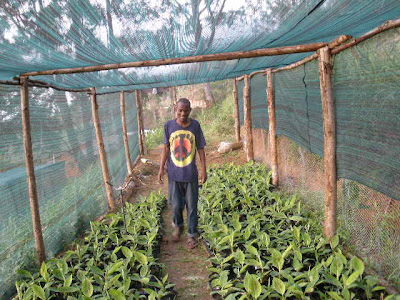
This banana nursery is providing jobs and nutritional food in an effort to end poverty in Wongonyi village.
Recently I've been reading a variety of books on poverty eradication. The scary part is that many of the books tell us that without serious intervention, poverty will continue to increase in the coming years on a grander scale in many of the world's developing countries. Through our work in Wongonyi Village, Kenya I have seen poverty first hand and viewed extreme poverty that exists in Kibera slum in Nairobi where everyday is a struggle to survive.
But there are those of us working in the developing world who are helping to equalize life around the globe, eager to ensure that everyone has the basic necessities of life. Jeffrey Sachs, an economist who wrote "The End of Poverty, Economic Possibilities of our Time", advocates for the Big Five development interventions that would be instrumental in decreasing poverty:
1) Agricultural inputs - water harvesting and small-scale irrigation, improved high yield seeds, use of green manures and cover crops, composting
2) Investments in Basic Health - village clinics, trained doctors and nurses, treatments of HIV/AIDS, anit-malarial medicines, skilled birth attendants
3) Investments in Education - school meal programs, improved teacher training and resources, expanded vocational training for high school students, access to technology
4) Power, transport and communications services - solar and wind power, village transport for getting produce and products to markets, modern cooking fuels and stoves, improved cell phones
5) Safe drinking water and sanitation - more water points for acces to water, rainwater harvesting, biosand water filters for safe drinking water, proper latrine facilities
In Wongonyi village, we are already addressing each of these issues by invitation and in consultation with the residents of this community. The villagers know what it is they require to move ahead but they lack the resources, tools and education to actually make the move. Through programs like The Ronnie Fund's Biosand Water Filter project we are already distributing home water filters that provide safe drinking water improving health of families. A new double seater western-style pit latrine at Wongonyi Primary School means better sanitation and allows special needs children to come to school. Our Money Maker Irrigation Pumps mean farmers are increasing their crop production because they can water greater field areas and as a result are making money by selling their surplus produce.
Poverty can be eradicated if we are sensitive to the needs of the communities in which we are working. I'm not saying that it is without difficulties as some people resist change out of fear of the unknown, even if it will benefit them with improve health and financial gain. But with careful education and by showing and explaining the benefits, people will eventually embrace change for the better. Those of us who live in the industrialized world really don't know what it means to struggle to survive every day, to have to beg for money to feed our children but that is the reality of life for millions of people around our globe. Here our biggest concern is whether to get a new car or a bigger flat-screen TV to keep up with our neighbour.
As Jeffrey Sachs says. "Eliminating poverty at the global scale is a global responsibility that will have global benefits. No single country can do it on its own. The hardest part is for us to think globally, but that is what global society in the twenty-first century requires." Poverty eradication is up to each and every one of us.

Thursday, January 7, 2010

Proper Stoves Mean Better Health


Zach Withers, an American volunteer, helps repair Grandma's kitchen, a smoky enclosed building, that is the cause of eye and respiratory problems. But this new year will see new properly ventilated stoves being installed in homes in Wongonyi Village, Kenya.

In much of the developing world, improper equipment is the leading cause of health issues. We saw this first hand in 2008 in Wongonyi Village where women cook in separate kitchen building that have no ventilation or over outdoor wood fires, where windy conditions cause the smoke to chase one around the fire. The women who are responsible for most of the meal preparations complain routinely about their stinging eyes or their respiratory problems. Sitting in the smoky kitchen with Getrude and the girls each night, I truly wondered how they could stand it each and every meal they had to cook. Here in the developed world, we don't even think about such issues for when we cook a meal we simply turn on an electric or gas range or oven that is powered by a clean fuel source and we have no thoughts of how our dinner preparations might impact our health, not to mention that we don't have to go out daily and find firewood to fuel our stoves.
But 2010 is a new year, full of new promise and a better quality of life for those in Wongonyi Village, Kenya. We, along with Zach Withers of Kosmos Solutions, have been researching the construction of new stoves that will drastically improve the quality of life for women in this rural village in Kenya. New stoves will have proper ventilation and will allow the women to cook more than one item at a time in safety. One of the concepts are stoves that are currently being made in rural villages in Guatemala through the Guatemala Stove Project. The only challenge will be in educating the women on the benefits of these new stoves. It is sometimes hard to implement change when people have been conducting tasks in a certain way all their life and have known no other method. Change has to be done in a respectful manner by teaching and training the women on the benefits these new implements will have on their health, the health of their families and the quality of their lives. In the Guatemala project, they give a stove for one family, show them the benefits and then have them show it off to the rest of the community which results in buy-in when others see the benefits it provides. In this way change develops within the community, not as a result of being imposed by someone with greater knowledge (the outsider).
As 2010 begins to kick into high gear, we look forward to helping to be the change agents in Wongonyi Village, making a difference to others lives in a positive and respectful manner.

Tuesday, December 1, 2009

World AIDS Day - December 1st

Today is a special day - World AIDS Day - a day to create awareness about the devastating effects of AIDS around the globe. This year's theme is "Universal Access and Human Rights." In many parts of the developing world and especially in all parts of Africa, AIDS is a major issue with destrcutive results for families. The disease is not well articulated, stigmas have been created due to lack of education that can leave people shunned by their communities, families and friends (even here in North America people with AIDS are shunned by those with misconceptions about the transfer of AIDS) . People are not fully educated on preventative methods of reducing or eliminating exposure to this disease. And most tragic of all, are the number of children that have been left parentless, because of the devasting effect of AIDS.

I have seen the orphans in Kenya whose parents have died from AIDS who have been left to fend for themselves and their siblings, left on their own without a loving parent to look out for their safety, or tuck them into bed each night. Sometimes they can find a home with a grandparent but these elderly persons have neither the resources nor the strength to look after these orphan children. If they are lucky, another family might take them in, but again food and resources may be severely limited.

So on this special day, we ask you to think about those who have been inflicted with this tragic disease. Speak out for them for universal access to drugs which can help prolong their life with quality and human dignity.

Wednesday, November 11, 2009

Making a Difference One Person at a Time


This little girl is an orphan who received clothes, toiletries and food thanks to a generous donor in Muskoka.

Prior to our trip to Kenya last summer, a donor approached us with a request to help the many orphans living in Wongonyi Village. Orphans and vulnerable children are a huge problem in most African countries as a result of the devastating effects of HIV/Aids. Parents fall ill to the disease that robs them of life leaving young children alone without parental supervision, making those children take on responsibilities of adults in tending for themselves and their siblings. Unfortunately, robbing them of their childhood as they spend time searching for food, clothing and firewood, just trying to survive. Some of these orphans are able to be taken in by a friend or grandparent but still life is not good for many grandparents are old and barely able to look after themselves let alone the added responsibility of young children.

But through the generosity of loving people in Muskoka who want to share their blessings of abundance, The Ronnie Fund has been able to begin helping some of these vulnerable children in Wongonyi Village, letting them know they are loved and that people half a world away truly care for them. This little girl was so shy and afraid of the people she was meeting she brought a friend with her for moral support. Such small gestures will have a big impact in the lives of these children.

As Richard Carlson said in his book, "Don't Sweat the Small Stuff at Work"; "Acts of kindness and goodwill are inherently wonderful. There's an old saying: 'Giving is its own reward.' This is certainly true. Your reward for being kind and making someone else feel good are the warm positive feelings that invariably accompany your efforts. So starting today, think of someone you'd like to make feel better and enjoy your rewards." I couldn't have said it better. Remember you don't have to solve the problems of the world, just focus on making a difference in one person's life at a time and before you know it you'll be changing the world.
Posted by Picasa