Showing posts with label Wongonyi Village. Show all posts

Monday, March 4, 2013

International Women's Day - March 8, 2013

Kinandi (shelling beans) - our Agricultural Instructor is a widow who looks after her extended family by selling her farm produce

Women - we are mothers, spouses, lovers, teachers, business leaders, caregivers and much more. Next week we celebrate women around the globe who keep the home fires burning with Womens' Week. It culminates in celebration with International Womens' Day on March 8, 2013. In my travels, especially in Africa, I have met women who have been involved in a variety of horrible situations - rape, abuse both mental and physical, husbands who have given their wives HIV and Aids and then left the women to raise their children alone. I am totally amazed at the resilience of these women who bravely continue on most without the assistance of any kind of social aid.They seems to have an inner spirit that allows them to continue on, to work to support their families with food, clothing and school fees.

We women here in the developed world are so blessed with our abundance. For the most part we have so many opportunities for a wonderful life and for those who do encounter difficulties there are a multitude of social service agencies to help those in need. I don't think we can even imagine what some of the women I know in the developing world have gone through and yet they have survived  and still want the best for their families.

On March 8th, please think of women worldwide who suffer silently but are filled with an inner beauty and spirit, a resiliency that transcends their difficulties. I know I'll be thinking of my women friends in Wongonyi Village and Nairobi, Kenya -  Kinandi, a widow and our Agricultural Farm Instructor; Beatrice, our Community Health Care Worker; Margaret my basket making Instructor; Getrude, Ronnie's mother and host to visiting university students and in the slums of Nairobi, Mama Caroline and her co-workers of Jitolee Crafts in Kibera Slums and the women of Bega Kwa Bega Craft Group in Mathare Slums. Remember to speak up for those women. Together we can tell their stories told and all make difference in the lives of women worldwide.

Sunday, November 11, 2012

UN Day for Malala Yusufzia - November 10, 2012


This is Malala Yusufzia, a very courageous 15 year old Pakistan campaigner and peace activist whose only crime was to speak out against the destruction of girls schools in Pakistan and to advocate for the rights of girls and women to be educated. On October 9th while on a school bus Malala was shot in the head by a Taliban gunman to silence her voice. Today Malala is recovering in a UK hospital and the world has become aware of the plight of women and girls around the world whose voices haven't been heard.

I know first hand about those girls and women in the developing world who do not have access to education. In many countries boys are the first to be educated in their families, yet it is girls turned women who really support their families financially. In Kenya primary education is provided by the government but secondary education is not. If your family has funds then as a girl (and even boys) you might be able to attend school, but if your family runs out of money in second term, you stay home until funds can be acquired. This means that education is not consistent or that you may never go to secondary school. Then a girl might be relegated to a life working as a housegirl and perhaps even getting pregnant and having to tend a family of their own, even though they might still be a teenager. The propsects are not bright for these girls.

When I was in Wongonyi Village, Kenya this June I met with the members of our Sere Girls Club and they told me of their daily challenges with regards to schooling. Even for these girls who are in school, life is not easy as often it is a long walk to school (sometimes 1-2 hours each way) and then at night when they get home they have chores to do (get firewood, make the evening meals, clean the utensils, feed the livestock and perhaps put younger siblings to bed) before they can get to their own homework studies.

To this end we support education scholarships that keep girls in school so they can have the prospect of a brighter future and we supply resources like IKEA solar desk lamps that we are giving to girls so they can study at night without having problems like eye strain and respiratory illness that results from using paraffin lamps. Here Emily and her brother receive an IKEA solar desk light that provides 4-5 hours of light at night.


Abigail, an alibino girl is considered by her uncle with whom she lives to be cursed and he refuses to pay for her secondary school fees. Thanks to caring donors in Muskoka Abigail is able to attend Allan Mjomba Secondary School and pursue her dreams.


We urge you to think about Malala and all the girls and women of the world who are being denied and education or have challenges in accessing educational resources. Here in the West education is considered a right for all and so it should be around the world. We all have the right to an education so girls and women are not kept in positions of oppression but instead can be the best they can be - the bright new leaders of the world. Do what you can to support educational programs for girls!

And sign the petition currently being circulated to nominate Malala for the Nobel Peace Prize. Do not let her voice and the voice of millions of girls across the globe be silenced!

Friday, September 28, 2012

The Power of Pennies - We Day Inspires!

Today I've been watching the live stream of We Day in Toronto. My daughter Martha is there again this year and I fondly remembered two years ago when our entire family volunteered at We Day - Peter and I in the Educator booths, Martha as a crowd pumper and Jeremy at a Merchandise booth. As a volunteering family with a family-run charity of our own in Kenya it was just natural to participate in We Day.

This year Craig and Marc encouraged youth to save their pennies and take them to the Royal Bank to help provide water for those in developing countries who  have water sources to which they have long distances to carry our precious life source back to their homes or for those whose water sources are closer to home but the water is not clean and safe to drink.

We know the power of pennies for it was by saving pennies in a jar that we started to help our Kenyan friend and "son"  Ronnie Mdawida pursue further university education in order to help the people of his home village of Wongonyi, in southeastern Kenya, and all people of Kenya to a better quality of life. So we began by simply putting pennies in a jar and The Ronnie Fund was started. We later expanded to using this penny bank our son Jeremy recieved. We are not a wealthy family but we felt blessed by the life we have here and were inspired by Ronnie's desire to help his people. We can tell you that it doesn't take long for that small and what some people consider insignificant coin to add up to making important social change. And as Ronnie started to help his village and we began to tell his story and ours, others joined with us individuals, churches businesses. Now six years later we are making a difference in people's lives, one person at a time through educational scholarships, microfinance, Biosand Water Filter project, Health care resources, new homes for widows, clothing and supplies for orphans, Sere Girls Club and Agricultural Tools and training for sustainability.

Our newest project is the Mghongo Leadership Centre, Eco Lodge and Demonstration Farm that once built will provide quality educational training on a variety of topics including Agriculture, Health and Nutrition, Water and Sanitation, Teacher Training, Leadership and Youth programming and much more.

Our meeting with Ronnie when he came to live with our family for three months in 2005 as a participant in the Canada World Youth Program has changed our lives in ways we could never have imagined. And it all started with pennies in a jar to help one young man to further his education but has resulted in  really helping him to achieve his dream of providing quality village life in Kenya.We have made life long friends in this remote hilltop village that I know will endure forever.

Some people are hesitant to help others or just too overwhelmed by the poverty of the world but if we each help just one other person, who in turn will help one other person and so on, and so on, just imagine a world of peace and equality for all.

 YOU CAN DO IT! WE ARE DOING IT!

 As the Dalai Lama said"
"If we are lucky enough to be living a good life, we should recognize this gift and thank God for it by looking out for others who need our help in breaking out of the cycle of poverty."

BE THE CHANGE!
 
To see how pennies can transform Kenyan communities check out our website
theronniefund@sympatico.ca

Ronnie giving an inspirational talk to 150 youth attending a Youth Barazza in Wongonyi Village telling them to never give up their dreams despite the hardships they may be facing. Ronnie faced those same challenges coming from a childhood of poverty to achieve his BA in Rural Sociology and is now working on his MA, transferring his knowledge to a new generation of Kenyan youth.

Monday, August 27, 2012

World Humanitarian Day Celebrates Health Care Workers


What would the world be without Health Care Workers. This year 2012's World Humanitarian Day celebrates the unsung heroes of the world "Community Health Care Workers". When I was in Wongonyi Village in Kenya this past June I learned of the amazing work that Beatrice Whanga is doing. I first met Beatrice on our trip to the village in 2008 when she was the Assistant Chairperson of the Ushirika Ladies Group (affectionately known as "The Poultry Ladies") for they had banded together raising chickens to generate income to help support their families. But that is a story for another time. In the recent past  Beatrice learned of a great need in the community, that of community health care, and she has now dedicated her life to filling that need. Although there does exist a District Hospital in the Mwambira District of the Taita Taveta Hills, it's strategic location in the centre of the four villages of Wongonyi, Mrangi, Mole and Makaleri means that it is a one to two hour walk from any of these villages to the hospital. So understandably, people wait until they are really sick to make the trek to the hospital at which point they are usually too ill to be served by the hospital which lacks anything more than basic health care, so you get sent to the hospital at Voi 40 km away, which also lacks resources. The end result is that if you are really ill you will usually die. Not a successful outcome. Beatrice realized that many people lacked knowledge about basic health and nutrition and many like the elderly or disabled can't even get to a hospital if they need one due to the hilly terrain. Beatrice has been known to carry someone too ill to walk on her back or pushed in a wheelbarrow in the middle of the night one hour to the hospital.

Beatrice has made it her mission to provide health care visits in homes to the people of Wongonyi and surrounding villages. She educates people on health issues and when care is needed. Not all of the stories are pretty ones, like the young mother, a teenager, who left her baby on a table and the baby rolled off and into the fire burning a large part of it's tiny body. The young mother didn't know enough to seek medical attention. But things are beginning to change with Beatrice's home visits. The amazing part of this story is that Beatrice does this all without being paid and with a lack of resources  because she believes someone needs to address the issue. On my recent trip to Wongonyi Village this past June I took over a digital blood pressure monitor. You should have seen Beatrice's face light up when I presented her with this new tool. She was so excited to be able to take people's blood pressure (above you can see her taking Ronnie's blood pressure). The second day she had it she called Ronnie excitedly saying we had saved a life. She had visited a woman and taken her blood pressure which was in the extreme range. Beatrice told the woman to go to the hospital to get medication. The woman didn't believe Beatrice but did go to the hospital. When she arrived she did not tell them why she was sent but asked to have her blood pressure taken and they were shocked. The nurse asked the woman how she had come to the hospital and she said she had walked slowly. The woman was given medication and kept at the hospital until she was able to walk home. At another meeting of 18 women Beatrice askked how many had ever had their blood pressure taken. Only Ronnie's mother Getrude put up her hand. Beatrice said she would be around to visit all the others in the next few days. Since I have been back in Canada Beatrice visits the women on a regular basis monitoring their blood pressure.

Before I came home Beatrice asked for a few more tools that would help her in her job. A stethoscope was one item. In Bracebridge a nurse Way Lem came to our aid and we sent over his two stethoscopes. Again Beatrice was overjoyed. She visited Mwambira hospital to learn their proper use and has been busy with her enhanced health care work. Beatrice is one of the unsung heroes in the world. She also works with the Kaza Moyo Mwambira Support Group( seen below), a multi generational and gender group of HIV positive people in Wongonyi Village helping them with health care issues and trying to assist in finding economic opportunities so that they are able to support their families. Many people shun those with HIV/Aids because they do not understand how HIV/Aids is spread. Beatrice  provides hospice care in her home, which requires repairs, when HIV patients are at end of life and have been rejected by their families. She also serves as the midwife for the four villages of Wongonyi, Mrangi, Mole and Makaleri, the last two being a two hour walk from Beatrice's home in Wongonyi Village.


On August 19th - World Humanitarian Day for 2012 and throughout the year - we salute Beatrice Whanga for her outstanding work as a Community Health Care Worker in Wongonyi Village, Kenya.

Saturday, March 3, 2012

March 3rd - Wangari Maathai Day

Members of Lukundo Youth Group check seedlings in their tree nursery.

It was this past year 2011 that Wangari Maathai, the Nobel Peace Prize winner from Kenya succumbed to ovarian cancer. It was a very sad day for those of us who work and live in Kenya for she had been an outstanding leader for the country giving hope to those like herself who have grown up with social injustice and poverty.

Wangari is best known for starting The Greenn Belt Movement, a tree planting campaign that she initiated to provide empowerment for women by planting trees. A staunch environmentalist she realized the effects on the environment from deforestation and the ripple down effect this had on women's lives and the lives of their families. In the past year Wangari had initiated the Billion Tree Campaign, asking people around the globe to help in planting a billion trees worldwide to help counter the effects of climate change.

With the development of The Mghongo Leadership Centre, Eco Lodge and Demonstration Farm soon to be built in Wongonyi Village, Kenya we celebrate Wangari and her work as a role model and great leader to the youth and women in our village. On the day of Wangari's funeral, each student and teacher in the village planted a tree in Wangari's memory.

Today we forever will mark as Wangari Maathai Day as designated by The Green Belt Movement organization and we will continue to plant trees in her honour on this day. Wongonyi Village, located high atop the Taita Taveta Hills in southeastern Kenya is a biodiversity hotspot of rare flora, fauna and bird life who inhabit the indigenous forests of the hills. Deforestation has touched our remote area too as villagers have ravaged the forests for firewood and building materials without thinking about or knowing the consequences of their actions for daily survival. Ronnie is working diligently to educate the youth and villagers on the consequences of deforestion, more mudslides in the rainy season, loss of soil due to rain and wind, the effects of the loss of the forests on weather patterns. And to this end we have also embarked on a tree planting project to revitalize this important ecological feature. Youth groups have set up tree nurseries and are propagating tree seedlings for planting. The forests are being regenerated and wildlife is returning and with each tree that is planted we will continue to keep Wangari's dream alive.

Monday, May 30, 2011

ECHO - Educational Concerns for Hunger Organization


Zero Grazing - this goat barn will hold 8 goats, keeping crops safe from wandering goats, and allowing the farmer to feed his goats nutritious food in a cut and carry system. The slatted floor means that the goat manure falls through and is collected in a bin below allowing easy access for collection by the farmer. The manure is then used to enrich the soil for crops.


Three styles of Rocket Stove currently being used in developing countries which are more fuel efficient saving both fuelwood and shortening the time women spend looking for firewood. The addition of a pot skirt also helps to channel the heat to the pot for added efficiency and shortening cooking time.


This past week I had the opportunity of taking a course called Introduction to Tropical Agriculture at ECHO (Educational Concerns for Hunger Organization) in Ft. Meyers, Florida. A neighbour had visited the ECHO facilities during a recent trip to Florida and had brought me back the brochure thinking I might be interested in what ECHO had to offer. He had wanted to get a book for Ronnie that would be of help to our work in Wongonyi Village, Kenya but was overwhelmed by the selection in the bookstore. I visited ECHO's website and found this course for those working overseas in developing countries which just happened to fit into my schedule. So last week, I along with 18 other people learned a lot about tropical agriculture, community development, the challenges of working with those in poverty and also had a chance to share ideas and concepts about our work in developing countries. Half our group was made up of students, some who had just graduated and were looking for opportunities for the next leg of their personal journey. Representatives from India, Burkino Faso, Niger, Tanzania and Germany rounded out our group of Canadian and Americans working in Kenya, Mexico, Honduras, Guatemala and Libyria.


It was an amazing time for me as I realized that although some concepts for temperate gardening can apply in developing countries, growing in the tropics and sub-tropics is really a different kettle of fish. There you can take a branch off a tree, stick it in the ground and viola, a new tree will grow. But concepts like composting and mulching are universal agricultural principles.I also learned of differing perspectives to use when working with those in the poverty cycle. Trees and plants that can change the face of poverty and malnutrition were shown to us along with their growing conditions and I know that Ronnie will soon be planting Moringa, the Miracle Tree, and Amaranth, a nutritious grain in Wongonyi Village, Kenya.


ECHO has a Global Demonstration Farm and Research Facility which assists those working in the field or those who having positions as trainers and technical resource staff. It is a living classroom focused on helping those who are subsistence farmers overseas to become more productive. ECHO also has a specialized library with staff that can help answer any of your questions regarding tropical agriculture and by joining the ECHO network you can have access to ECHO Development Notes, a highly regarded technical bulletin sent out quarterly to agricultural development workers, teachers and trainers working overseas. Additionally ECHO holds an agricultural conference each fall with participants coming from around the globe to learn new techniques and share agricultural and development solutions.


The ECHO Seed bank contains over 350 varieties of seeds for difficult growing conditions and locations. Overseas development workers who will report back on performance and community acceptance of plants can obtain up to 10 trial packs of free seed per year.


ECHO also has a bookstore and nursery that are open to the public as well as giving tours to school groups and the public. For more information on ECHO and the resources it offers check out their website at http://www.echonet.org/.

Monday, May 16, 2011

World Orphans Day - May 16, 2011

Isaiah Mwandami, Project Manager for The Ronnie Fund Biosand Water Filter Project, (himself an orphan looking after three siblings), shows an orphaned family their new Biosand Water Filter that has just been manufactured which will provide them with clean, safe drinking water.


Around the globe thousands of children live everyday without the benefits of guidance, nurturing and love from parents. Many of these vulnerable children have lots one or both parents to the ravishes of HIV/Aids, genocide and tribal wars and other diseases.

Sometimes these children are being taken care of by grandparents and other relatives. However if the job becomes too onerous, the grandparents too old, or the relatives unable to feed a few other mouths these children find themselves cast out to live on their own, fending for themselves, barely able to survive having to find work to sustain themselves rather than going to school and enjoying the fun activities children are supposed to partake in. In a very many cases, one finds older siblings taking on the caretaking roles, looking after many younger siblings.

World Orphans Day is to raise awareness of the number of children living in parentless households and the great needs and challenges these children have. In our village of Wongonyi, Kenya we have recorded 60 children out of the 300 attending Wongonyi Primary School to be orphans and that does not include orphan siblings attending (if possible) Allan Mjomba Secondary School. Ronnie has been approached by orphaned children starving for lack of food and crying because of treatment by adults who have note realized starvation to be the issue. The care of orphans and vulnerale children in Wongonyi Village is another of the challenges we are researching and trying to address in terms of care facilities.

Currently we have been able to provide some orphans with clothing and food along with school fees and supplies. Recently a donation from the Eastern Star branch in Bracebridge, Ontario allowed us to begin providing Biosand Water Filters to orphan families. These home water filters provide the children with clean, safe drinking water improving their health and lessen their trips to seek medical help for stomach ailments from water borne bacteria. Now The Ronnie Fund is exploring different models of care homes that would provide a family type setting for those orphans in Wongonyi Village.

Sometimes when we travel we from the West are repulsed by children in large centres like Nairobi, Calcutta and Brazil who are begging in the street but for many of the orphaned children it is their only alternative to try and get a little money or food to sustain their siblings. A sad state of afairs for those of us who have seen the reality of children living alone. Imagine your own children have to live on their own finding food, raising money, not being able to go to school and you can see how millions of children worldwide live. As well those grandparents and relatives looking after orhpans have a great weight put on their shoulders.

Today, I ask you to think about those orphan children and support a cause that is making a difference in these vulnerable children's lives. Asante-sana (thank you!)

Tuesday, March 22, 2011

World Water Day - March 22, 2011

A young orphan gets a glass of water from their Biosand Water Filter in Wongonyi Village, Kenya.

When we are thirsty and want a drink, we simply go to the tap, turn it on a fill our glass with cool clean, safe water. Need clean clothes - throw them in a washer and hit the button. Water fills the machine to clean our clothes. Have a dirty body - turn on the tap and enjoy a long, hot shower ar a relaxing bath, all which take lots and lots of water.

But in most of the developing world, clean safe water is a rare commodity, a luxury that most cannot afford or even find. Often women must walk for miles to fetch water which they then have to carry home balanced on their heads, causing pain from neck compression. Young children must take time away from school if their chore is to fetch the water. And more often than not the water comes from dirty streams, ponds or other unsanitary sources which then leads to disease and illnes taking precious time away from school or work.

Today is World Water Day, a time when all of us should consider those who do not have access to this basic human right and how wasteful we who do have plenty of water are. We in the West forget were our water comes from, that it is a fragile resource that someday might not be as accessible as it now is.

In Wongonyi Village, Kenya we are working to address the issue of clean safe water through our Biosand Water Filter project. Through a grant from Bracebridge United Church we were able to purchase a steel mold for manufacturing these home water filters. Many families in the village have been able to purchase the filters for a nominal fee. Most recently, a donation from the local unit of Eastern Star allowed us to start manufacturing and distributing water filters to orphans who cannot afford to purchase the units. Already villagers are telling us the health benefits they have received through reduced days of sickness from waterborne illnesses. Isaiah Mwandami, an orphan himself looking after two orphan siblings, is our Biosand Water Filter project manager visiting homes and schools in the area telling them about the Biosand Filters and educating people about proper sanitation procedures.

Although today is the official World Water Day, we urge you to consider how fortunate you are to have access to unlimited clean safe water and to encourage you to conserve waterevery day in your daily activities. Turn the tap off when you brush your teeth, take a 3 minute shower instead of a bath, run the dishwasher or clothes washer only when they are full and flush the toilet only when necessary (if it's yellow let it mellow, if it's brown flush it down) - they may seem like simple things to do but they can all add up to saving our water supply. Remember that water really is a precious commodity.

Wednesday, February 9, 2011

3 Tips for Safe Travel

"Young Zedi enjoys a glass of water from his new Biosand Water Filter which provides clean, safe drinking water in Wongonyi VIllage, Kenya"

Recently we connected with a group from Olympia, Washington "Water for the World" who are all about building and installing Biosand Water Filters in the developing world. These water filters will provide safe, clean drinking water to those whose only option now is to drink dirty or unsafe water which leads to illness, disease and time away from work and school.


We watched their video in which one of their members had three tips for safe travel in developing countries.


1. DON'T GET HIT - that means watch yourself when travelling by foot or vehicle. In much of the developing world, safety regulations are not as stringent as they are here at home. Matatus and buses are usually overloaded with people and items being transported. Roads are not as well kept as at home which can lead to lots of accidents. If you don't feel safe using public transport because of overloaded conditions, consider hiring your own car and driver.


2. DON'T GET BIT - that means take precautions for malaria and other diseases that are spread by bites from insects. As well as taking malaria pills ( and make sure your doctor prescribes the correct malaria medication for the area you are travelling in as there are different strains of malaria) make sure you use a malaria bednet. These are easily obtained in major cities in shopping centres. We always purchase malaria nets when we get to Nairobi and use them in the village during our stay and leave them to be used by orphans and others who might not be able to afford them.


3. DON'T EAT SHIT - that means, don't drink the local water or eat fresh vegetables that might have been washed in local water. We always eat food that has been cooked. You don't want to spoil you volunteer vacation or your time helping out in a much needed program in a rural village in a developing country because you have a stomach ailment. As well if you are in a remote area, medical help may not be close at hand. We always take our own medical kit each time we go to Kenya with diarrhea medication, gastrolyte and other stomach remedies and again we leave our medical kit behind as our village of Wongonyi, Kenya must use a District Hospital located several kilometres away.


Travelling and working in a developing country is a very rewarding experience and one that can change your life. But the key to staying safe and healthy is using common sense and these three tips.

Saturday, November 20, 2010

World Toilet Day - November 19


I know that it is not common to talk about our personal hygeniene methods and toilet talk but on World Toilet Day - it's quite OK. Did you know that their are 2.6 billion people worldwide who do not have a toilet and 1.2 billion who defecate outside. Not only is it unhygenic but it can also lead to the spread of serious disease. And have you ever had to squat over a whole in the ground to perform you daily functions. I can attest to the fact that it is not the most pleasant experience, especially when you have bad knees as I do.
And imagine those living in the meg-slums in our world - in Kibera and Mathare slums in Nairobi or the slums of India and Brazil. Here there are only a few public bathrooms. Sewage runs in ditches throughout the slums. Imagine the fear of women who have to use public facilities only to be raped on the way to and from the toilets. Even when our HIV positive friends tell their rapists they are HIV positive, the men don't really care and rape anyway. So instead, some of the women must perform their duties in their one room shacks in front of their grown children - imagine the loss of dignity these women experience. And not to mention getting hit by a flying toilet - a most disgusting event. When people do their business indoors, they bag their feces in plastic bags and hurl them out their doors. Unsuspecting individuals walking by can be hit by these "flying toilets" which often break open covering the person hit.
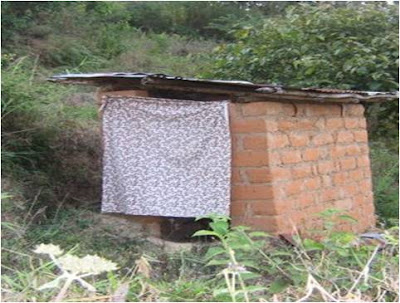
In Wongonyi Village, Kenya most of the homes do not have bathrooms or if they do they are not in good condition, much like the original pit latrine at the Mdawida home in the top photo. After having attended a Water and Sanitation Workshop (led by the CAWST - Centre for Affordable Water and Sanitation Technology) teaching Biosand Water Filters and proper pit latrines, Ronnie taught local youth to build proper pit latrines. You can see in the next two photos the beautiful new pit latrine they built prior to our visit in 2008. A proper western style bathroom with adequate ventilation meant that local families could now exercise proper personal hygiene.

On World Toilet Day we are trying to raise awareness of the importance of proper toilet use and techniques which in turn leads to improved health, and less days away from work and school because of illness. For more information on World Toilet Day, check out the website http://www.worldtoilet.org/


Tuesday, July 27, 2010

The Value of Volunteers

Mama Pads - reusable sanitary napkins for girls and women of Wongonyi.


Our volunteer crew included our selves, Kathy and Peter Wood, son Jeremy, his girlfriend Sarah, our friends The Evans-Lucy family (Don, Jan, Omar and Vincent) along with our friend Russ Van der Jagt.


This past weekend we were given the opportunity to raise funds for The Ronnie Fund by helping to clear tables at the Snyder/Montgomery wedding in Bracebridge, Ontario. In exchange for helping at the reception the Montgomery family made a donation to The Ronnie Fund. Without the assistance of our friends we could not have undertaken the job and raised these much needed funds. It is the value of volunteers that we treasure. Our friends were happy to be able to assist us in this way. Sarah and Omar were able to get 4 hours of volunteer hours they need for their high school diploma, so it was a win-win-win situation. And as Omar told his mom, "Hey, I'm actually have a good time."


With that donation, we have purchased an overlocking treadle sewing machine for our new project in Wongonyi Village, Kenya. The girls in the sewing class at the local Polytechnic are making Mama Pads, resuable sanitary napkins which they will sell as a micro business. They have already received training in sewing the pads and in business skills but needed an over locking sewing machine to make a quality product. Ronnie has purchased the sewing machine and it is on its way to the village now. Ronnie will present it to the Polytechnic class when he gets there this weekend. The Polytechnic instructors will be so surprised as they had told Ronnie that they did not have funds to purchase a machine at this time. We can just see their faces when Ronnie shows up with the gift.
The availability and use of sanitary napkins is a big issue not only in Wongonyi Village but in most parts of rural Africa. Disposable sanitary napkins are very expensive to purchase and as a result most girls and women use rags. The girls are very self-conscious and do not go to school during their period, losing valuable education time. Last year the Bracebridge Pathfinder group made some Mama Pads for the girls of our Sere Girls Club and they were well received. We have no doubt that our Mama Pad project will be a great success for the Polytechnic Institute and bring self-confidence to the girls and women of Wongonyi.
We all have special gifts and talents. For some, they have a gift of funds to give charities in need and for others, it is the gift of their time to volunteer during a special event. We thank all our donors and volunteers for their special gifts for together we are making a difference in the lives of those in Kenya.

Thursday, June 17, 2010

Day of the African Child - June 16

The Watoto of Wongonyi Village, Kenya. Watoto is the Kiswahili word for "children".


Yesterday was a great day to celebrate children , especially the children of Africa for June 16th has been declared the Day of the African Child.
For those of us who have been to Africa, we have experienced the beauty of these children. Their shy smile as they greet you on the road on their way home from school, the giggles and laughter as children see their own image displayed on the back of a digital camera and the happiness when they are presented with a gift like a new school uniform, textbooks or a solar reading light to assist them with their education.
Kenya and all parts of Africa are home to a great quantity of forgotten children, those whose parents have succumbed to the ravishes of Aids. These children have been shuffled from relative to relative hoping to find support and love or been taken in by someone else in their community only to find that they are put to work or that in the end, the family does not have food or financial resources to care for them, so the orphans must subsist on their own. These forgotten children lack food, clothing, sometimes even a proper home or shelter not to mention the inability to afford school supplies and fees. In Wongonyi Village, Kenya we too have our issues with orphans who lack the love of a family or caregiver, a problem we are working to rectify.
So on this Day of the African Child, we ask that you think about these children and how you might help them to live by supporting initiatives like The Ronnie Fund as we facilitate programs to assist orphans and children by providing food, school uniforms, fees and textbooks, or other programs like Sleeping Children Around the World that provides bed kits and malaria bed nets, or Grannies to Grannies which supports grandmothers who are looking after their orphaned grandchildren.
These vulnerable children deserve our care and assistance. Their gentle ways and beautiful smiles hide the real reality of their lives but we can make a difference in their lives. Please help today.

Friday, April 16, 2010

The Value of Volunteering


Volunteering can open you up to a host of new experiences, whether here at home or abroad. It's a way of sharing your talents with others in need, be it the local food bank, tutoring adults to read or helping those in developing countries learn new skills.
We are very fortunate to have our own charity, The Ronnie Fund, working with Wongonyi Village in southeastern Kenya. We just returned from our second trip to Wongonyi and feel blessed to have been able to take our teenagers both times. It has been an opportunity for them to see and live in another culture, to see just how blessed they are and the share the simple pleasures with other children. For our children , they learned that receiving a gift means the giver didn't rush out to a store, for in Wongonyi a shop may just a little stick kiosk by the roadside, but that a gift comes from the heart - a basket woven by hand from sisal or palm fronds or perhaps even a live chicken. And for people who earn only a $1.00 per day, the gift of a chicken is huge, so graciously receiving it is important. Even though you might want to give it back to them for you realize you might be taking their food source this would be an insult. But instead you take it back home (your African home that is!) and kindly share it, where it becomes dinner for all the next day.
If you are bringing others over to help volunteer for your organization, there are a few key points to remember. Create a volunteer package with information on what types of shots, visas, and other documentation they will require to get into the country. Host an evening to inform your volunteers of the cultural differences they will experience (ie. women not wearing tank tops and shorts, purchasing a kanga to wear when in a village location). It is important that you and your volunteers are culturally sensitive, that you fit into village life and not stand out, it will help you be accepted by the people you are working with.
And most importantly, you need to inform your volunteers of the mental challenges they may face and experience. There are vast social differences you might experience - staying in a mud hut with no electricity, no running water (the joys of a sponge bath), eating foods you are not familiar with (goat stew anyone!) and perhaps only one meal per day, washroom facilities (squatting over a pit latrine or even having to go in the bush), and the abject poverty of those living in the slums. Without informing them of what they will see and experience during their stay, it will be a shock to them and they may have great difficulties in readjusting once they are home.
However, when your volunteers are well prepared, the benefits and values they will experience far outweight the challenges they may face. The joyful spirit of people who are living one day at a time, the smiles, hugs and laughter from children when you take their picture and you show them. The welcome songs and grateful thanks when you provide tools and gifts that will improve the quality of their life.
Recently, some volunteers heading to Kenya for a voluntourism trip told me they felt uneasy and a bit nervous because they really weren't sure what to expect when they got there, the unfamiliarity of being in a strange place initially without charity sponosr being present. By taking the time to fully inform your volunteers prior to travelling, you will allay their fears, make them feel more comfortable in the new land and make their experience of volunteering for and with you a pleasureable and profitable experience for them, your organization and the people with whom you are working. And if they have a great experience the first time, you'll find they want to come back and continue sharing their blessings with your organization.

Sunday, April 4, 2010

Kenya - Subsistance Farming versus Market Gardening

"Travel can open up a window on the world - it expands your horizons and shows you that the world the media portrays is not always as implied. Often we only hear about the poverty that is Africa and yet there are areas of great beauty and wellbeing."

We just returned from a two week visit back to Wongonyi Village in Kenya to check up on our projects that The Ronnie Fund has been supporting. It's been one and a half years since our last trip and once again, our children Martha and Jeremy accompanied us. What a fantastic opportunity for them to see another part of this great planet earth.

I noticed new changes in Kenya this trip - for me it seemed in Nairobi that the city was cleaner (not as many small piles of smouldering litter at the roadsides) and the Mombassa-Nairobi highway was so much better than the last time. Only one small detour hindered our trip to Wongonyi. But still the road up to Wongonyi Village was the same, a rocky road of deep gulleys that meant 10 km seemd more like 100 as the range rover inched its way up a road that was carved out of the hillside. My daughter Martha knew not to look out the window as we were sitting on the cliffside of the matatu. Thankfully the rain held off until later that evening when we were safely esconced in the village.

Although Wongonyi, located high atop the Taita Taveta Hills is a subsistence farming village where farmers have little access to markets in Voi and Mombassa, that would produce income from their agricultural efforts. The poor road infrastructure is a hindrance to producing more and in turn being more successful. And yet, a trip we took up to the Rift Valley lookout showed us a different Kenya, a more profitable area shown in the photo above. The Rift Valley is much like our Holland Marsh, an area rich in agricultural fertility that thrives on market gardening. And easy access to a continuation of that same Mombassa - Uganda Highway means that Rift Valley farmers can easily ship their produce to markets in Voi and Mombassa on the coast. It is amazing that a simple thing like a proper road can mean the difference between profit and loss, subsistence and successful market gardening, even the distance from the Rift Valley to Voi is so much greater than from Wongonyi to Voi.

Although Africa and Kenya do have areas that where poverty and living on a dollar a day is the norm, where parents often cannot afford school fees or uniforms, villages rely on the World Food Program and subsistence farming means simply that, that people are just subsisting but there are also areas of Kenya where the quality of village life is improving and farming has moved into market gardening, a more profitable way of life. In Wongonyi, we are working in co-operation and collaboration with local farmers and village residents to provide them with the tools and resources they need to move ahead but they still have to rely on local government to provide them with the infrastructure like proper roads to access profitable markets. Hopefully, local governments will see the benefits to all people in providing these essential services.

Wednesday, March 24, 2010

March 22 - World Water Day


Zach, Eddie, Isaiah, Grandma and Chris show off Biosand Water Filters ready for distribution in Wongonyi Village.
Well, I know I am a couple of days late in celebrating World Water Day but we have just returned from a successful trip to Wongonyi Village in Kenya. Here in the developed world we are blessed to have water ready at our fingertips whenever we need it for drinking, bathing, watering our gardens. We simply go to the tap, turn it on and presto, water at our fingertips. And because of its easy access and availability we are wont to waste this precious natural resource.
Yet in the developing world access to water is not so easy. People often have to walk several kilometres each day to fetch water, carrying the heavy jugs home on their heads, compressing their spines or in wheelbarrows making for aching arms. And the water is not always clean or safe - sometimes it is muddy water from water hole that is also shared with wild animals.
World Water Day is a day of awareness of this important natural resource and the many people worldwide who go without safe, clean drinking water leading to intestinal illness and diseases that keep children from school and adults from their jobs. In Wongonyi Village, The Ronnie Fund is addressing the issue of safe drinking water by providing Biosand Water Filters in homes. These concrete filters are filled with sand and gravel replicating the earth's natural water filtering process. After two weeks from installation, the filtered water is ready to be safely drunk. We were able to see the difference that safe drinking water is having on the residents of Wongonyi. It's amazing how a simple tool like a Biosand Water Filter can have such positive impact on peoples lives.

Wednesday, March 3, 2010

Kenya, Here We Come!

It's hard to believe that tomorrow we leave again on another African Adventure. It's been a whirlwind month as we arranged for Visas, Kenyan currency, booking our flights through Fly for Good, meeting with folks who wanted to donate goods and funds for the trip and the daily e-mails back and forth between Ronnie and ourselves as we prepare for the journey and they prepare for our coming.

While we've been busy here, Ronnie has been busy ferrying volunteers back and forth between Nairobi and Wongonyi Village. And then he had to go pick up the oil press we ordered and send it ahead to the village on three different buses and then in land rovers up to the village, which has been a challenge in itself as the roads are in bad shape due to the rains. As well, Ronnie's wife Serah has been also busy checking out uniforms and the purchase of textbooks for the Sere Girls Club, all so that we can spend more time in the village and less time in Nairobi shopping for these items ourselves.

Back at home, our house is now filled with 12 large suitcases and chests, plus 3 carrying on bags, 3 laptop bags and one guitar all ready to be taken to Toronto's Pearson Airport tomorrow.
By travelling through Fly for Good (see my earlier post) which supports humanitarian trips with airline discounts, we also learned we could each take an extra checked bag, hence the 12 bags we are taking, filled with lots of tools and goodies for the village - soccer shirts donated by our local soccer association, items donated by our local hospital, farming tools, solar shower units supplied by the local Canadian Tire store, books, games and musical instruments for the primary school, fabric and sewing supplies for our ladies sewing groups, solar lights for students, and a solar room light unit from Light Up the World along with 60 T shirts for the Ikanga Scout troop and pencil cases donated by TerraCycle filled with pencils, erasers, sharpeners and notebooks from the Burks Falls Scout troop. And finally some personal gifts for Ronnie, Serah and their families - books and clothes for the new baby, Tim Horton hot chocolate, marshmallows, maple candies and a travelling coffee mug along with inspirational books the men had been searching for.

It's getting late and we have the final check of tickets and passports, yellow fever certificates and last minute essentials and then bed, because tomorrow comes quickly and there will still be the final checklist of items to complete before heading off.

As our Kenya friend Steve emailed us today "Karibu Kenya!!"

Sunday, January 24, 2010

The End of Poverty - A New Era


This banana nursery is providing jobs and nutritional food in an effort to end poverty in Wongonyi village.
Recently I've been reading a variety of books on poverty eradication. The scary part is that many of the books tell us that without serious intervention, poverty will continue to increase in the coming years on a grander scale in many of the world's developing countries. Through our work in Wongonyi Village, Kenya I have seen poverty first hand and viewed extreme poverty that exists in Kibera slum in Nairobi where everyday is a struggle to survive.
But there are those of us working in the developing world who are helping to equalize life around the globe, eager to ensure that everyone has the basic necessities of life. Jeffrey Sachs, an economist who wrote "The End of Poverty, Economic Possibilities of our Time", advocates for the Big Five development interventions that would be instrumental in decreasing poverty:
1) Agricultural inputs - water harvesting and small-scale irrigation, improved high yield seeds, use of green manures and cover crops, composting
2) Investments in Basic Health - village clinics, trained doctors and nurses, treatments of HIV/AIDS, anit-malarial medicines, skilled birth attendants
3) Investments in Education - school meal programs, improved teacher training and resources, expanded vocational training for high school students, access to technology
4) Power, transport and communications services - solar and wind power, village transport for getting produce and products to markets, modern cooking fuels and stoves, improved cell phones
5) Safe drinking water and sanitation - more water points for acces to water, rainwater harvesting, biosand water filters for safe drinking water, proper latrine facilities
In Wongonyi village, we are already addressing each of these issues by invitation and in consultation with the residents of this community. The villagers know what it is they require to move ahead but they lack the resources, tools and education to actually make the move. Through programs like The Ronnie Fund's Biosand Water Filter project we are already distributing home water filters that provide safe drinking water improving health of families. A new double seater western-style pit latrine at Wongonyi Primary School means better sanitation and allows special needs children to come to school. Our Money Maker Irrigation Pumps mean farmers are increasing their crop production because they can water greater field areas and as a result are making money by selling their surplus produce.
Poverty can be eradicated if we are sensitive to the needs of the communities in which we are working. I'm not saying that it is without difficulties as some people resist change out of fear of the unknown, even if it will benefit them with improve health and financial gain. But with careful education and by showing and explaining the benefits, people will eventually embrace change for the better. Those of us who live in the industrialized world really don't know what it means to struggle to survive every day, to have to beg for money to feed our children but that is the reality of life for millions of people around our globe. Here our biggest concern is whether to get a new car or a bigger flat-screen TV to keep up with our neighbour.
As Jeffrey Sachs says. "Eliminating poverty at the global scale is a global responsibility that will have global benefits. No single country can do it on its own. The hardest part is for us to think globally, but that is what global society in the twenty-first century requires." Poverty eradication is up to each and every one of us.

Thursday, January 7, 2010

Proper Stoves Mean Better Health


Zach Withers, an American volunteer, helps repair Grandma's kitchen, a smoky enclosed building, that is the cause of eye and respiratory problems. But this new year will see new properly ventilated stoves being installed in homes in Wongonyi Village, Kenya.

In much of the developing world, improper equipment is the leading cause of health issues. We saw this first hand in 2008 in Wongonyi Village where women cook in separate kitchen building that have no ventilation or over outdoor wood fires, where windy conditions cause the smoke to chase one around the fire. The women who are responsible for most of the meal preparations complain routinely about their stinging eyes or their respiratory problems. Sitting in the smoky kitchen with Getrude and the girls each night, I truly wondered how they could stand it each and every meal they had to cook. Here in the developed world, we don't even think about such issues for when we cook a meal we simply turn on an electric or gas range or oven that is powered by a clean fuel source and we have no thoughts of how our dinner preparations might impact our health, not to mention that we don't have to go out daily and find firewood to fuel our stoves.
But 2010 is a new year, full of new promise and a better quality of life for those in Wongonyi Village, Kenya. We, along with Zach Withers of Kosmos Solutions, have been researching the construction of new stoves that will drastically improve the quality of life for women in this rural village in Kenya. New stoves will have proper ventilation and will allow the women to cook more than one item at a time in safety. One of the concepts are stoves that are currently being made in rural villages in Guatemala through the Guatemala Stove Project. The only challenge will be in educating the women on the benefits of these new stoves. It is sometimes hard to implement change when people have been conducting tasks in a certain way all their life and have known no other method. Change has to be done in a respectful manner by teaching and training the women on the benefits these new implements will have on their health, the health of their families and the quality of their lives. In the Guatemala project, they give a stove for one family, show them the benefits and then have them show it off to the rest of the community which results in buy-in when others see the benefits it provides. In this way change develops within the community, not as a result of being imposed by someone with greater knowledge (the outsider).
As 2010 begins to kick into high gear, we look forward to helping to be the change agents in Wongonyi Village, making a difference to others lives in a positive and respectful manner.

Wednesday, November 11, 2009

Making a Difference One Person at a Time


This little girl is an orphan who received clothes, toiletries and food thanks to a generous donor in Muskoka.

Prior to our trip to Kenya last summer, a donor approached us with a request to help the many orphans living in Wongonyi Village. Orphans and vulnerable children are a huge problem in most African countries as a result of the devastating effects of HIV/Aids. Parents fall ill to the disease that robs them of life leaving young children alone without parental supervision, making those children take on responsibilities of adults in tending for themselves and their siblings. Unfortunately, robbing them of their childhood as they spend time searching for food, clothing and firewood, just trying to survive. Some of these orphans are able to be taken in by a friend or grandparent but still life is not good for many grandparents are old and barely able to look after themselves let alone the added responsibility of young children.

But through the generosity of loving people in Muskoka who want to share their blessings of abundance, The Ronnie Fund has been able to begin helping some of these vulnerable children in Wongonyi Village, letting them know they are loved and that people half a world away truly care for them. This little girl was so shy and afraid of the people she was meeting she brought a friend with her for moral support. Such small gestures will have a big impact in the lives of these children.

As Richard Carlson said in his book, "Don't Sweat the Small Stuff at Work"; "Acts of kindness and goodwill are inherently wonderful. There's an old saying: 'Giving is its own reward.' This is certainly true. Your reward for being kind and making someone else feel good are the warm positive feelings that invariably accompany your efforts. So starting today, think of someone you'd like to make feel better and enjoy your rewards." I couldn't have said it better. Remember you don't have to solve the problems of the world, just focus on making a difference in one person's life at a time and before you know it you'll be changing the world.
Posted by Picasa

Wednesday, August 12, 2009

Grass Pea - High Protein Foodstuff or Lethal Weapon

Some call it serendipity, I say this book was sent to me for a reason. Not long ago I was sent fellow garden writer Amy Stewart's new book "Wicked Plants" to review. I was giving it a quick glance before placing it on the pile of new books to read when it fell open at the page on "Deadly Dinners". The word Africa caught my attention because of our family's charity work (The Ronnie Fund) in Kenya. So I began to read and I couldn't believe the text.

Earlier in the year, Ronnie's mother Getrude was afflicted with a strange illness. She suffered an unexplained paralysis in her legs. She simply couldn't walk and her sons even had to carry her up to the outhouse. The doctor in the local hospital in Mwambira District couldn't diagnose the problem, so she was sent to the bigger hospital in Voi. She eventually regained the use of her legs but the problem was never correctly identified.

But as I began to read Amy's chapter on Deadly Dinners highlighting Grass Pea, I knew I had found the answer. Grass Pea or Chickling Vetch is a dietary staple in Africa, India, Asia and the Mediterannean as it is an excellent source of protein and is one of the few crops to survive severe drought. However it does contain a neurotoxin called beta-N-oxaxlyl-diamino propionic acid or beta-ODAP and one of the first signs of beta-ODAP poisoning or lathyrism is weakening of the legs. The toxin kills nerve cells paralyzing the victim from the waist down and without treatment, the victim will die. Wow, I thought, perhaps this could be the source of Getrude's problem.

Further reading suggested that since it was a popular food stuff, it was actually safe when prepared properly. Grass Pea must be soaked for a long time in lots of water or fermented in breads and pancakes. The problem in Africa is that when grown in times of drought, there obviously is not enough water to properly soak the peas, thereby creating a lethal problem.

I immediately e-mailed Ronnie and told him of my findings asking if they grew Grass Pea in Wongonyi Village. The answer was, "Yes Mama, we eat it all the time but I never heard of this problem with the peas. I will contact the local health authorities to make sure they know about this." Amy's book advises, " Today one of the great tragedies of famines in places like Ethiopia and Afghanistan is that the high-protein pea is typically reserved for men to give them strength so that they can feed their families. Instead, it has the opposite effect, reducing them to crawling on their knees (and as one report noted, "Wheelchairs aren't an option for most lathyrism sufferers, as they tend to live in dirt-floor huts"). Even if the drought receded and they stopped eating the peas, they might still be disabled for life."

Hopefully, this new found knowledge, thanks to Amy's book, will help prevent other people in Wongonyi Village and the other villages that Ronnie visits in Kenya to keep healthy by preparing Grass Pea in a safe manner. Thanks Amy!!

If you are working in areas in Kenya that are growing Grass Pea, please ensure that the local residents are advised about this life-threatening toxin. With a little knowledge and safe preparation techniques, Grass Pea can continue to provide a high protein foodstuff to those in need.

Kathy